
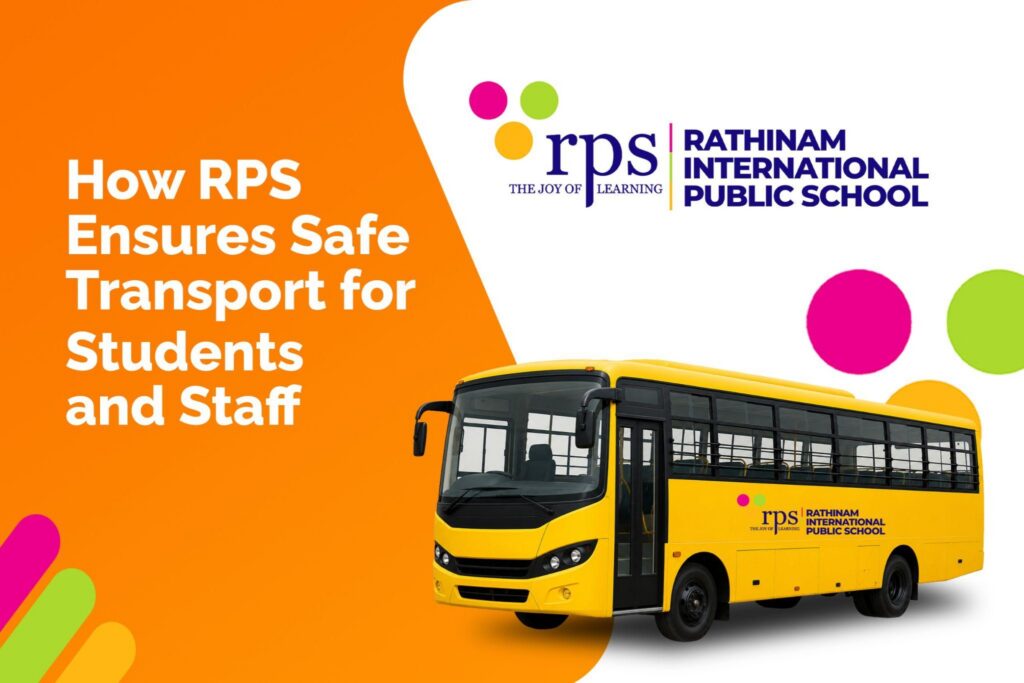
Rathinam Public School (RPS) recognises that a safe school journey is a vital component of every student’s day.
School bus transportation isn’t just about arriving on campus.
It is about:
- Safety
- Convenience
- Timely travel
- Responsible supervision
- Comfortable journeys
- Organised pickup and drop
- Parent confidence
- Staff accessibility
If a transport system is well organised, it could alleviate the stresses of free movement for students and staff starting and finishing their workday.
Why Safe School Transport Matters
During the working day, children travel to and from home and school.
These places are likely to make transport planning more important.
A well-managed system should focus on:
- Student safety
- Suitable routes
- Timely pickup
- Timely drop
- Vehicle condition
- Driver responsibility
- Student behaviour
- Emergency preparedness
For parents, consistent transportation can minimize daily worries over their child’s transportation.
Planned School Bus Routes
Proper planning of routes to and from school is an absolute must.
Routes can be planned by considering:
- Student locations
- Common areas inhabited by various people
- Road accessibility
- Travel distance
- Traffic conditions
- Pickup points
It could also be time-saving, as it might prevent us from taking longer routes than necessary.
Safe Pickup and Drop Arrangements
Boarding and exiting a school bus require special care.
Students should have:
- Pickup location identified.
- Clarity of departure/arrival timings
- Organised boarding
- Appropriate supervision
- Clear instructions for transport
It is advised for parents too to be aware of the pickup and drop-off times.
This helps create better coordination between:
School → Transport Team → Parents → Students
Vehicle Safety and Maintenance
A school bus is in a service area and can be expected to require constant care.
Transport management can include checks for:
- Brakes
- Tyres
- Lights
- Doors
- Seats
- Emergency exits
- First-aid supplies
- Vehicle documents
- All-around condition
Frequent servicing can detect any problems that may occur in everyday transportation.
Responsible Drivers Matter
Drivers carry a significant responsibility in school transport safety.
Important expectations include:
- Valid driving ID and licenses to drive
- Responsible driving
- Following traffic rules and other legislations
- Knowing when to drive within limits
- Route following
- Avoiding dangerous driving behaviours
- Maintaining professional conduct
- Reporting vehicle concerns
Student Supervision During Travel
Children require assistance on the move.
Transport supervision can encourage students to:
- Sit properly
- Avoid distracting the driver.
- Avoid obstructions in the aisles.
- Follow boarding instructions
- Wait for the vehicle to come to a halt.
- Be mindful of other students.
- Follow safety rules
Good behaviour when travelling means that the environment is safer for everyone.
Safety Rules Students Should Follow
Even a simple set of rules can bring about a transformation.
Before Boarding
- Arrive at the pickup point.
- Queue/Wait in a safe place
- Steer clear of hanging around near traffic.
- Wait for the vehicle until it is turned off.
Inside the Bus
- Remain seated
- Do not place your hands outside the bus.
- Avoid excessive movement
While Getting Down
- Wait until the bus stops completely.
- Exit carefully
- Check surroundings
- Use the assigned drop procedure.
Supporting Staff Transportation
School staff can also find transport availability for the school area helpful.
Organised staff travel can support:
- Timely arrival
- Convenient commuting
- Enhanced scheduling routes
- Easier travel problem handling
- Consistent routines throughout each day
If students and staff are arriving on time, then the day goes more smoothly.
What About Unexpected Situations?
It must also look towards a variety of circumstances which may disrupt the journey.
Examples include:
- Traffic congestion
- Road closures
- Vehicle problems
- Heavy weather
- Route changes
- Unexpected delays
A transparent communication process can help keep parents and school authorities updated when any changes happen.
Role of Parents in Transport Safety
The transport system also includes parents.
They can help by:
- Being present at designated intervals
- Teaching children the basics of road safety
- Updating contact information
- Reporting concerns about transport services
- Urging children to adhere to bus regulations
A Simple School Transport Safety Checklist
Before a school journey begins, important checks can include:
- Vehicle ready
- Driver available
- Route confirmed
- Pickup schedule prepared
- Safety gear inspected
- Student record information
- Emergency contact details available
- Staff informed
- Communication system ready
FAQs About RPS School Transportation
1. Why is safe transportation important for school children?
Children are transported to and from school in an effective manner, with trips being managed and monitored, and provided in a comfortable way.
2. Why are planned bus routes useful?
Planned routes will also help to organize pickup locations and drop off points, preventing time wasting resulting from delays and unscheduled journeys, and limiting driving trips to absolute minimum.
3. Do students have responsibilities during school travel?
Yes. Students are required to follow transport instructions, remain in their seats when told, accept personal responsibility, and follow safe boarding and disembarking procedures.
4. How can parents support school transport safety?
Parents may follow pickup arrangements, provide the school with current contact details, inform children about traffic safety, and notify the school of all changes in transport arrangements.
Rathinam Public School: Making Every School Journey Safer
Some of our good school experiences can even start before the students come into the classroom at Rathinam Public School.
A strong transportation approach focuses on:
- Safe travel
- Responsible driving
- Organised routes
- Student supervision
- Safe transport support
- Vehicle maintenance
- Parent communication
- Staff convenience
The goal is straightforward:
Not too long taxi rides. Safe door-to-door travel on time. Home-to-school safety.